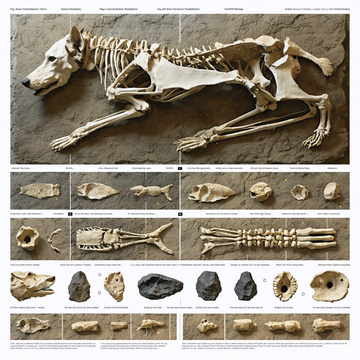
For a long time, people have called the dog “man’s best friend,” but exactly when that friendship began has been hard to prove. Now, two studies published in Nature in March 2026 have pushed the strongest genetic evidence much further back in time. Researchers identified dog genomes from Pınarbaşı in central Türkiye dating to about 15,800 years ago, from Gough’s Cave in the UK dating to about 14,300 years ago, and from Kesslerloch in Switzerland dating to about 14,200 years ago. That is more than 5,000 years older than the previous genetic record for confirmed dogs. (natureasia.com)
The most interesting point is not simply that these animals were old. It is that they were already spread across a huge area of western Eurasia. According to the studies, Palaeolithic dogs from different regions were genetically similar enough to belong to a wider population that expanded between about 18,500 and 14,000 years ago. This suggests that dogs were not domesticated separately in each European region. Instead, an early dog population seems to have moved with, or between, different hunter-gatherer groups. In other words, dogs may have become human companions before farming began, during the last Ice Age, as people travelled, met one another, and shared animals as well as ideas. (natureasia.com)
The new DNA also gives a more human picture of the story. At Pınarbaşı, isotope evidence suggests that people may have fed dogs fish, and some dogs appear to have been intentionally buried. These details hint that the relationship was already emotionally and socially important, not purely practical. Even so, scientists still cannot say exactly where or when wolves first became dogs. What they can now say with much more confidence is this: by around 15,800 to 14,200 years ago, dogs were already living closely with people across a broad part of Eurasia. Our oldest animal friendship may be even older than we once imagined. (nhm.ac.uk)