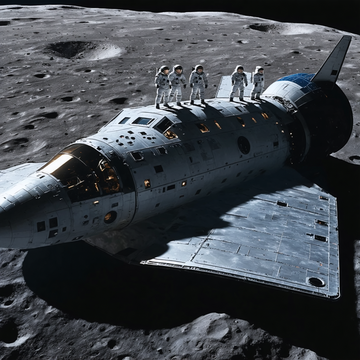
On April 1, 2026, NASA launched Artemis II from Kennedy Space Center in Florida. Four astronauts were on the Orion spacecraft: Reid Wiseman, Victor Glover, Christina Koch, and Canadian astronaut Jeremy Hansen. The crew named their spacecraft Integrity. Artemis II did not land on the Moon, but it flew around the Moon and came back to Earth. It was the first human moon flight since Apollo 17 in December 1972, more than 53 years ago. (nasa.gov)
Artemis II was a test flight, but it was still very exciting. The crew checked Orion’s life-support system, tested manual flying, exercised, and took photos of the Moon. On April 6, Orion passed about 4,067 miles above the Moon. The astronauts also broke the old Apollo 13 record and became the humans who traveled farthest from Earth, reaching about 252,756 miles away. (nasa.gov)
The mission ended on April 10, 2026. Orion splashed down in the Pacific Ocean near San Diego at 5:07 p.m. PDT. During the mission, the crew traveled 694,481 miles in total. Artemis II was also a team effort. NASA led the mission, Canada sent Jeremy Hansen, and Europe’s service module gave Orion power, air, water, and helped move the spacecraft through space. (nasa.gov)
Why is this mission important? Artemis II showed that NASA’s new rocket and spacecraft can carry people safely on a deep-space trip. The mission also gave NASA and its partners useful data for future Artemis flights. In simple words, Artemis II was a big practice flight for the future. It also showed that space exploration is stronger when countries work together. (nasa.gov)