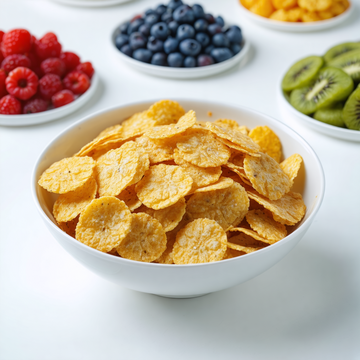
The American cereal aisle is becoming a laboratory for a larger cultural experiment: can a bowl of rainbow-colored breakfast food be made to look more “natural” without changing what it really is? In April 2025, the FDA and HHS announced a push to phase out petroleum-based synthetic dyes from the U.S. food supply by the end of 2026, and the FDA has since accelerated approvals for alternatives derived from natural sources. By May and July 2025, it had approved colors such as galdieria extract blue, calcium phosphate, butterfly pea flower extract, and gardenia blue; on February 5, 2026, it also said companies could make certain “no artificial colors” claims even when foods contain colors from non-petroleum sources. (fda.gov)
Cereal makers and retailers have responded with unusual speed. General Mills announced that all its U.S. cereals would lose certified colors by summer 2026, and in March 2026 it said its entire K-12 school-food portfolio had already reached that milestone ahead of schedule. Target went further on the retail side, announcing on February 27, 2026, that by the end of May all cereal sold in its stores and online would be made without certified synthetic colors. In other words, the shift is no longer a niche “clean label” gesture; it is becoming a structural change in how mainstream breakfast products are formulated and merchandised. (generalmills.com)
But is this a health revolution? The science invites caution rather than triumphalism. The FDA says the totality of evidence suggests most children experience no adverse effects from color additives, though some children may be sensitive. California’s OEHHA, after a systematic review, reached a stronger conclusion: the evidence supports a relationship between synthetic food dyes and adverse neurobehavioral effects in some children, including inattentiveness and hyperactivity. That makes the current reformulation wave meaningful, especially for susceptible families. Yet it also leaves room for a subtler illusion: under the FDA’s 2026 labeling approach, a brightly tinted cereal may now say “no artificial colors” even if its color has simply been swapped from a petroleum-based dye to a plant- or mineral-derived one. My inference, based on the companies’ own pledges, is that this is a color revolution more than a nutrition revolution: the box may look morally cleaner even when the cereal’s sugar, fiber, and overall dietary value remain largely unchanged. (fda.gov)