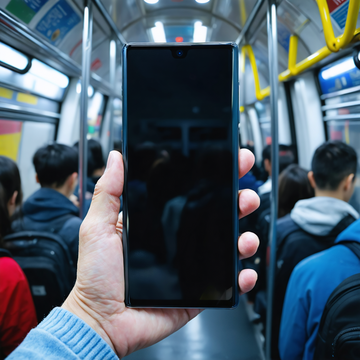
On the Galaxy S26 Ultra, Samsung has turned privacy from an accessory into a built-in habit. Its new Privacy Display is integrated into the hardware itself, and Samsung describes it as the first built-in privacy display on a mobile phone. When the feature is on, the screen stays clear from the front but becomes much harder to read from the side. Users can switch it on from the Quick Panel, set it to activate automatically for specific apps, password entry, or popup notifications, and choose a “Maximum privacy protection” mode that narrows the viewing angle even further while dimming the display. (samsung.com)
That matters because smartphone etiquette in public has been strangely awkward for years. On a train or in a café, many people angle their phones away, lower their brightness, or even cover the screen with one hand. Privacy Display suggests a different social rule: the phone itself should protect your personal space. If this idea spreads, “shoulder surfing” may come to feel less like an unavoidable part of city life and more like bad manners that technology no longer excuses. Samsung is clearly promoting the feature for exactly these public situations, especially travel and other crowded environments. (news.samsung.com)
Still, this is not a simple victory lap. Samsung’s own notes say that some image-quality changes can occur and that, depending on angle and brightness, some information may still remain visible. Independent reviewers have also found trade-offs: lower brightness, reduced crispness, and a weaker overall display experience compared with earlier Ultra models, especially when Privacy Display is active. Tech Advisor also reported user complaints about fuzzier text and eye discomfort, while Samsung responded that the S26 Ultra keeps the same resolution as the S25 Ultra but uses adjusted sub-pixel rendering, which can make text edges look different in enlarged photos. (news.samsung.com)
So, will anti-peeping become the next standard smartphone feature? Not immediately. The S26 Ultra proves that people want privacy without ugly screen protectors, but it also shows how difficult that goal is when users still expect a brilliant, ultra-sharp display. In that sense, the real change may be cultural before it is technical: Samsung has made screen privacy visible enough that rivals now have to decide whether public manners are becoming a core part of premium phone design. (news.samsung.com)