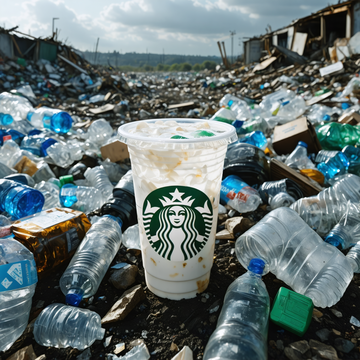
When people see a recycling mark on a Starbucks cold cup, they may believe the cup will be made into something new. But the latest information suggests the real situation is more complicated. On February 2, 2026, Starbucks announced that its polypropylene cold cups had earned How2Recycle’s “Widely Recyclable” label in the United States. Starbucks said this means more than 60% of U.S. households can put these cups into curbside or drop-off recycling programs. The U.S. Federal Trade Commission also says recyclable claims are linked to access: if proper facilities are not available to at least 60% of consumers, companies should qualify the claim. (about.starbucks.com)
However, being accepted for recycling is not the same as actually being recycled. In a May 2026 investigation, Beyond Plastics placed 53 Bluetooth trackers in Starbucks cups at 35 stores in nine states and Washington, D.C. Thirty-six trackers gave usable results, and none reached an actual recycling plant. According to the group, 16 cups ended up in landfills, 9 at incinerators, 8 at transfer stations, and 3 at sorting centers, which are not the final step of recycling. Reuters reported the same main finding and said Starbucks questioned the study’s method. (static1.squarespace.com)
So, are Starbucks’s “recyclable” cups really recycled? The fairest answer is: sometimes in theory, but often not in practice. Starbucks says the cups are designed to be recyclable, but real recycling depends on local collection systems and infrastructure. Some recycling industry groups also say the trackers may have changed the cups’ path because electronics and metal are treated as contamination and may be removed. In other words, “recyclable” does not always mean “will be recycled.” For customers who want to reduce waste right now, a reusable cup still seems like the clearest choice. Starbucks has allowed U.S. customers to use their own cup for mobile and drive-through orders since 2024. (marketscreener.com)