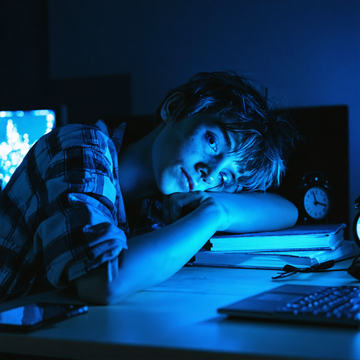
American teens are sleeping less than before. A new 2026 study that used national survey data from 1991 to 2023 found that sleep went down in every teen age group. The newest students had the lowest sleep levels of all. The CDC also reports that in 2023, only 23% of U.S. high school students got at least 8 hours of sleep on an average school night. But teens ages 13 to 18 need 8 to 10 hours each day. (twin-cities.umn.edu)
One big reason is the teen body clock. During the teen years, the sleep hormone melatonin stays high later at night and drops later in the morning. That means many teens do not feel sleepy early, even if they must get up early. School start times make this worse. The CDC says middle and high schools should start no earlier than 8:30 a.m., because late bedtimes plus early school mornings leave many teens tired. (nimh.nih.gov)
But biology is only part of the story. Teen life is busy. Homework, clubs, sports, part-time jobs, friends, and phones can all push bedtime later. The American Academy of Pediatrics says these school and social demands, along with technology use, help keep teens up on school nights. The CDC also found that about half of U.S. teens had 4 or more hours of non-school screen time a day in 2021 to 2023, and these teens were more likely to feel less rested and to have irregular sleep routines. (publications.aap.org)
Stress matters too. NIMH says that when teens do not get enough sleep, it becomes harder to pay attention, control themselves, and do well at school. Good sleep also helps mental health. So the answer is not simply, “Go to bed earlier.” American teens are facing a mix of late body clocks, early schools, busy schedules, and bright screens at night. Later school starts, less screen use before bed, and more time to rest may help. (nimh.nih.gov)