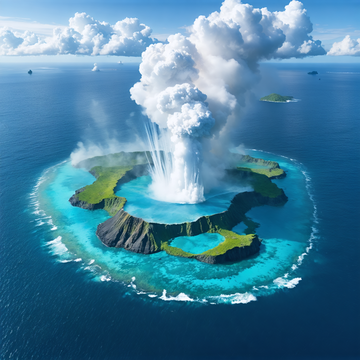
A new volcano eruption started under the sea in the Central Bismarck Sea, north of Papua New Guinea, on May 8, 2026. Scientists think it is happening near Titan Ridge, close to the place of another submarine eruption in 1972. This area is deep and hard to study, so scientists still do not know exactly which volcanic feature is erupting. The site is about 82 kilometers south of Rambutyo Island and about 125 kilometers southeast of Manus Island. (science.nasa.gov)
The eruption gave clear signs from space. After a small swarm of earthquakes on May 8, NASA satellites saw white steam-rich plumes rising into the air. Other satellites showed green and discolored seawater around the eruption site. They also found floating pumice, which is light volcanic rock that can stay on the water. On May 11, Landsat 9 captured images of closely spaced plumes above a growing underwater volcanic platform. On May 12, another satellite detected heat over an area of about seven square kilometers, showing that a lot of hot material was near the surface. (science.nasa.gov)
This eruption is exciting because a new island might be born. NASA scientists say that, if enough material rises above the sea, a small island could appear. But the island might also collapse or wash away quickly. So far, the eruption seems less explosive than famous recent underwater eruptions like Hunga Tonga-Hunga Ha'apai in 2022. Scientists think that is because this eruption is linked to a volcanic ridge and spreading zone, which often produce quieter activity. (science.nasa.gov)
The story is still changing. By May 28, 2026, the Darwin Volcanic Ash Advisory Centre said the eruption was still expected to be ongoing, even though weather clouds made the ash hard to see in satellite images. That means scientists are still watching closely. This undersea eruption is a reminder that Earth is always changing—even in places we cannot easily see. (bom.gov.au)