The World Happiness Report 2026 gives a serious warning about young people and social media, but its message is more complex than a simple “screens are bad” story. Published on March 19, 2026 by Oxford’s Wellbeing Research Centre with Gallup and the UN Sustainable Development Solutions Network, the report says that in 85 of 136 countries, people under 25 are happier now than they were in 2006–2010. Yet the English-speaking world stands out in a troubling way. In the United States, Canada, Australia, and New Zealand, youth happiness has fallen by an average of 0.86 points on a 0–10 scale, and Oxford’s summary says heavy social media use appears to be contributing to this drop, especially among girls. The report also notes that youth wellbeing has fallen mainly in North America, Australia, New Zealand, and Western Europe, while in most other regions young people have not seen the same relative decline. (gallup.com)
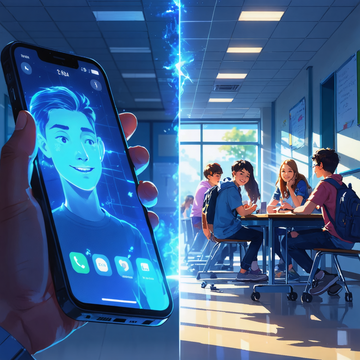
Just as important, the report does not say that all internet use harms wellbeing. Using PISA data from 47 countries, it finds that life satisfaction is highest at low levels of use and lower at higher levels, especially for girls. Gallup’s summary highlights a striking pattern: students who spend more than seven hours a day on social media report much lower wellbeing than those who use it for less than one hour. The report also separates online activity into two groups. Communication, news, learning, and content creation are linked to higher life satisfaction, while social media, gaming, and browsing for fun are linked to lower life evaluations when use becomes heavy. In other words, the real question is not only how long teenagers are online, but also what they are doing there. Perhaps the most hopeful finding is that a sense of belonging at school is an even stronger predictor of life satisfaction than social media hours. For language learners, this creates a memorable lesson: “social” media does not always create real connection; happiness seems to grow more reliably where digital life supports trust, friendship, and belonging in the real world. (gallup.com)