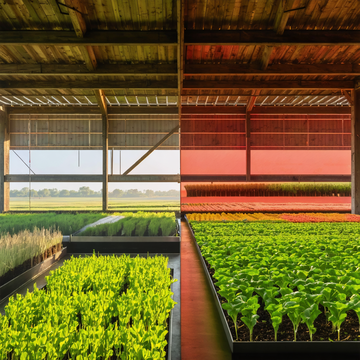
On 5 June 2026, a dairy farm in Schipluiden, South Holland, officially opened what RespectFarms and the Province of Zuid-Holland describe as the world’s first cultivated-meat farm. Instead of relying only on barns and pasture, the site now includes 20- to 200-liter bioreactors that grow meat cells from a tiny animal tissue sample under carefully controlled conditions of temperature, oxygen, and nutrients. Crucially, this is not yet a full commercial plant. It is a pilot project, supported by €500,000 in provincial funding, designed to test whether cell cultivation could become a viable additional income stream for farmers while also serving as an experience centre for schools, policymakers, and the public. (zuid-holland.nl)
The Dutch setting is highly significant. The Netherlands was the first EU country to create a formal pathway for pre-approval tastings of cultivated meat, allowing selected participants to try products under controlled conditions before EU-wide market authorization. Dutch companies have moved quickly: Mosa Meat held a pre-approval tasting in 2024 and, on 22 January 2025, submitted its first EU Novel Foods application for cultivated beef fat. Even so, the regulatory barrier remains substantial. In the European Union, cultivated meat is treated as a novel food, which means EFSA must assess its safety before it can be sold commercially. EFSA has made clear that such products require full scientific evaluation, and as of April 2026 it had received only one cell-culture-derived food application of animal origin before, from duck cells in September 2024. (en.cellulaireagricultuur.nl)
So, will meat production really migrate from pasture to bioreactor? Probably not all at once, and certainly not soon. A 2024 Nature Food study suggested that continuous manufacturing in a 50,000-liter facility could bring cultivated chicken into the price range of organic chicken, which shows that industrial scaling is not a fantasy. But the gap between Schipluiden’s 20–200 liter farm reactors and a genuinely mass-market food system remains enormous. Environmental claims are also more complicated than the industry’s early slogans implied: recent review work shows that cultivated meat may use less land and water than conventional beef, yet some models still predict high energy demand, and results vary sharply depending on assumptions and data quality. (nature.com)
In that sense, the Dutch “cultivated meat farm” is as much a social experiment as a technological one. It asks a provocative question: can farmers remain central to meat production even when the animal body is no longer the main production unit? If the answer is yes, the farm of the future may look less like a feedlot and more like a compact biotech workshop. If the answer is no, Schipluiden will still have revealed something essential: the future of meat will be decided not only by biology, but by regulation, engineering, energy, and public trust. (zuid-holland.nl)