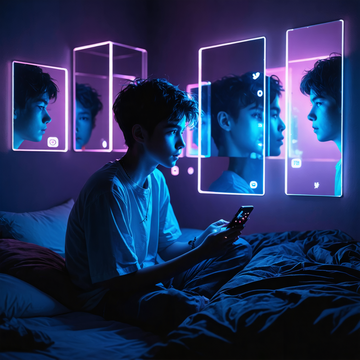
Why do “looks comparisons” on TikTok and Instagram feel so powerful? One reason is that teens are not only watching other people. They are also judging themselves at the same time. In Pew Research Center’s April 15, 2026 report on U.S. teens’ experiences on TikTok, Instagram, and Snapchat, most teens said these apps neither help nor hurt their mental health, and about six in ten said what they see makes no difference to their self-esteem. Still, a meaningful minority said the content makes them feel worse, which shows that the same platform can feel harmless to one teen and painful to another. (pewresearch.org)
Recent research helps explain why. A 2026 systematic review and meta-analysis found that heavier social media use was linked to greater body image concerns and eating-disorder symptoms in adolescents. The link was stronger in studies focused on Instagram and in studies with more girls. The authors argue that adolescence is a sensitive stage because identity, body image, and peer approval matter deeply, while social media is highly visual, interactive, and often unrealistic. In other words, these apps do not just show faces and bodies; they also teach teens what kinds of faces and bodies seem to “win” online. (link.springer.com)
A May 2026 longitudinal study looked even more closely at appearance-based behavior. It found that upward appearance comparison—seeing others as better-looking than yourself—was strongly related to body dissatisfaction, social anxiety, and depressive symptoms. It also examined “appearance investment,” such as taking many selfies, editing photos with filters, asking friends to check a picture before posting, or deleting a post that gets too few likes. These behaviors were linked to worse mental health, and depressive symptoms could also predict more appearance comparison later, suggesting a harmful cycle. (journals.sagepub.com)
Another study, published in 2024, found that upward comparisons were not constant, but when they happened, teens reported lower self-esteem in that moment. Earlier work with 11- to 14-year-olds also found that teens who felt body dissatisfaction related to social media had higher depressive symptoms and social anxiety, and they checked social media more often. So the real issue may not be simple screen time. It is the kind of attention social media invites: constant looking, ranking, editing, and waiting for feedback. That is why a “before-and-after” or side-by-side beauty post can feel like more than entertainment. For many teens, it becomes a quiet test of self-worth. (pubmed.ncbi.nlm.nih.gov)