As summer 2026 begins, travel in southern Europe feels subtly different. The beaches are still full, the cafés are still busy, and the photographs are still irresistible. Yet in Spain, especially, mass tourism is no longer seen as an uncomplicated success story. Euronews recently reported that Spain is facing Europe’s strongest backlash against overtourism, and the pressure is still rising: Spain welcomed a record 96.8 million international visitors in 2025, then more than 26.5 million in the first four months of 2026. The tourism ministry also expects about 13.1 million inbound international airline seats in June 2026, up 7.1% from June 2025. (euronews.com)
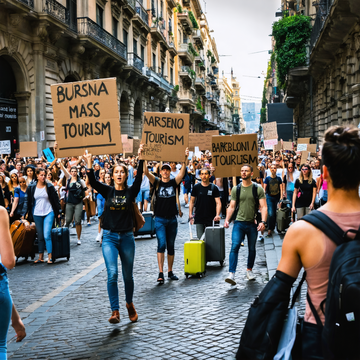
Barcelona has become the clearest symbol of this tension. In June 2025, anti-overtourism demonstrators marched through central districts, brandished angry slogans, and famously sprayed water pistols in tourist areas. The deeper issue, however, is housing: Barcelona City Council has said that the city’s 10,101 tourist-apartment licences will expire by November 2028 and will not be renewed, with the aim of returning those homes to residential use. Even so, the scale of tourism remains enormous. According to the Barcelona Tourism Observatory, “Destination Barcelona” ended 2025 with 26.1 million tourists. (euronews.com)
Mallorca tells a similar story in a more fragile setting. On the Balearic Islands, where land and infrastructure are inherently limited, the regional government approved a tourism-containment decree in April 2025 that bans the creation of new tourist accommodation in multi-family buildings and targets illegal rentals. Earlier proposals also included sharply higher summer tourist-tax rates and a levy on holiday vehicles. Meanwhile, protests in Palma linked the tourism boom directly to soaring rents and the erosion of everyday life for residents. (caib.es)
What is happening in Barcelona and Mallorca is not simply a rejection of visitors. It is a struggle over who gets to live in these places, on what terms, and at what cost. For today’s traveler, that makes Europe more complicated—but also more real. (investing.com)