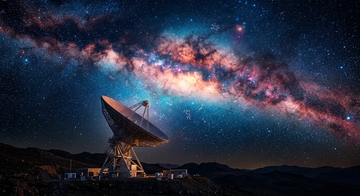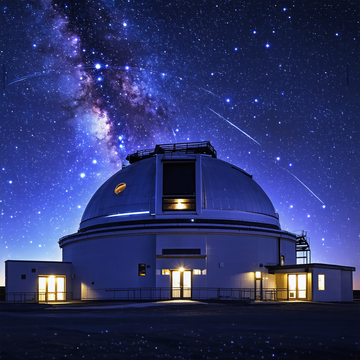
Space can feel quiet and far away, but the Vera C. Rubin Observatory is turning it into something fast, busy, and almost live. On April 2, 2026, Rubin scientists announced that they had found more than 11,000 new asteroids using early test and optimization data. The International Astronomical Union’s Minor Planet Center confirmed the results, making this the largest single batch of asteroid discoveries submitted in the previous year. (rubinobservatory.org)
What makes this news even more impressive is the speed. The team collected about one million observations in only a month and a half. Those data included not only 11,000 new asteroids, but also more than 80,000 known asteroids, including some that had effectively been “lost” because their orbits were too uncertain. Among the new discoveries were 33 previously unknown near-Earth objects, though Rubin says none of them are a danger to Earth. The dataset also contains about 380 trans-Neptunian objects, icy worlds beyond Neptune, and two of them are now counted among the 30 most distant known minor planets. (rubinobservatory.org)
Rubin is exciting because it does not only collect data; it shares changes in the sky almost immediately. The observatory’s real-time alert system began scientific operations on February 24, 2026, and issued about 800,000 alerts on its first night. In the future, that number could rise to seven million alerts per night. Rubin compares each new image with older template images, and when it notices a change, it can send an alert within two minutes. That means astronomers around the world can react quickly to asteroids, exploding stars, and other sudden events. (rubinobservatory.org)
This is only the beginning. Rubin’s main 10-year survey, the Legacy Survey of Space and Time, is expected to start later in 2026, and scientists say the observatory may eventually discover around this many asteroids every two or three nights in its early years. Visitors can already explore the discoveries through Rubin’s Orbitviewer, a 3D tool that shows Solar System objects using real data in real time. For students and space fans, that makes astronomy feel less like a textbook subject and more like a living story that is still being written. (rubinobservatory.org)