As of April 4, 2026, Artemis II is no longer a distant promise: NASA launched the mission at 6:35 p.m. EDT on April 1, sending Reid Wiseman, Victor Glover, Christina Koch, and Canada’s Jeremy Hansen on an approximately 10-day journey around the Moon and back. It is the first crewed flight of the Space Launch System and Orion spacecraft, and the first human mission of the Artemis program. (nasa.gov)
What makes Artemis II so important is that it is a test flight with people on board. NASA is using the mission to prove that Orion can support a crew in deep space, including life-support operations, emergency procedures, exercise routines, and long-distance communications with Earth. By April 4, the spacecraft was already more than halfway to the Moon, and the crew had begun preparing the cabin for a lunar observation period scheduled for April 6. (nasa.gov)
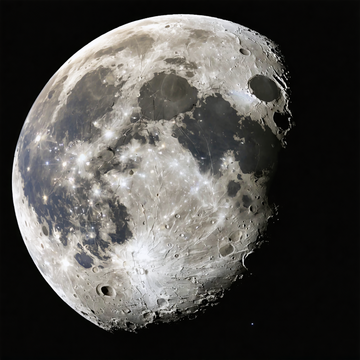
The mission is scientific as well as symbolic. During the flyby, the astronauts are expected to spend about six hours observing the Moon, studying craters, ancient lava plains, and surface fractures that preserve the history of the early solar system. NASA also planned observations of a solar eclipse from Orion’s point of view, creating a rare chance to study both the Moon and the Sun’s corona in deep space. These experiences will help future crews develop the skills needed for surface missions, especially near the lunar south pole. (nasa.gov)
Artemis II also shows that the new age of lunar exploration is international. Europe’s service module supplies Orion with propulsion, water, oxygen, and other essentials, while Jeremy Hansen’s seat on the mission highlights Canada’s expanding role in deep-space exploration. At the same time, NASA has updated its broader Artemis architecture, adding a new demonstration mission in 2027 and aiming for a steady rhythm of lunar missions after that, with the first Artemis landing currently targeted for early 2028. (esa.int)
In that sense, Artemis II is more than a return to the Moon. It is a rehearsal for a future in which lunar exploration becomes regular, multinational, and closely connected to the longer human ambition of reaching Mars. (nasa.gov)