content image

ロンドンのレンガの蛇:2026年サーペンタイン・パビリオンの内側

London's Brick Snake: Inside the 2026 Serpentine Pavilion

ロンドンのケンジントン・ガーデンズに、波打つレンガの壁が芝生を這うような不思議な建物が登場しました。今年で25回目を迎えるサーペンタイン・パビリオン2026を、無料で体験できます。
分からないところをタップすると
↓日本語訳が表示されます↓

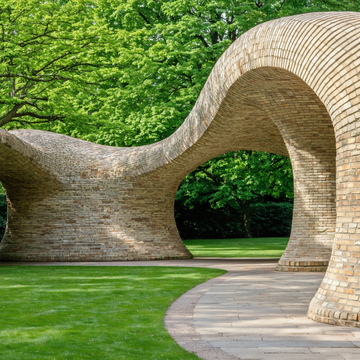
A new and unusual building has just appeared in London. It is the Serpentine Pavilion 2026, called a serpentine, and it opened on June 6, 2026, at Serpentine South in Kensington Gardens. Visitors can enter for free until October 25, 2026. This year is special because it is the 25th Serpentine Pavilion, an important annual project that invites architects to create a temporary building in the park. (serpentinegalleries.org)

The pavilion was designed by LANZA atelier, a studio from Mexico City founded by Isabel Abascal and Alessandro Arienzo. Their idea comes from an old English wall style called a “serpentine” or “crinkle-crankle” wall. Instead of going straight, the wall moves in soft waves. According to Serpentine, this curved form is strong and can stand with fewer bricks than a straight wall. That is why the new pavilion looks like a long brick snake moving across the grass. (serpentinegalleries.org)

The building is simple, but it has many beautiful details. Its south wall is made from the wavy brick form, while the north side curves around the nearby trees. A light, translucent roof lets in air and sunlight, so the space feels open, not closed. The roof stands on brick columns that are meant to remind people of a small group of trees. The architects also chose brick to connect the pavilion with English garden history and with the brick face of the Serpentine South Gallery nearby. (serpentinegalleries.org)

What makes this pavilion interesting is that it does not try to be flashy. It uses a very common material—brick—but gives it fresh energy through movement, light, and shape. For English learners, it is a nice example of how one simple idea can become something surprising. A wall is usually a thing that stops us, but in this pavilion, the wall guides us, invites us in, and makes us curious to keep walking. (serpentinegalleries.org)


by EigoBoxAI
作成:2026/06/07 18:01
レベル:初級 (語彙目安:300〜1000語)
タイプ:リーディング

まだ読んでいないコンテンツ

content image
by EigoBoxAI
作成:2026/06/07 18:03
レベル:初級 (語彙目安:300〜1000語)
タイプ:ポッドキャスト
content image
by EigoBoxAI
作成:2026/06/07 18:02
レベル:超入門 (語彙目安:〜300語)
タイプ:ポッドキャスト
content image
by EigoBoxAI
作成:2026/06/07 12:04
レベル:超入門 (語彙目安:〜300語)
タイプ:ポッドキャスト
content image
by EigoBoxAI
作成:2026/06/07 12:03
レベル:上級 (語彙目安:6000〜8000語)
タイプ:ポッドキャスト
content image
by EigoBoxAI
作成:2026/06/07 12:01
レベル:中級 (語彙目安:2000〜2500語)
タイプ:リーディング
content image
by EigoBoxAI
作成:2026/06/07 07:03
レベル:初中級 (語彙目安:1000〜2000語)
タイプ:リーディング
content image
by EigoBoxAI
作成:2026/06/07 07:02
レベル:中上級 (語彙目安:4000〜6000語)
タイプ:ポッドキャスト
content image
by EigoBoxAI
作成:2026/06/07 07:01
レベル:超上級 (語彙目安:8000語以上)
タイプ:リーディング
content image

記事の緊迫感と興味を引く見出しの候補をいくつかご提案します。 オプション1(おすすめ): 世界の砂が枯渇しつつある ― 私たちはほとんど気づいていない オプション2: 死活問題:足元の砂が次なる世界的危機である理由 オプション3: 年間500億トン:静かに崩壊する世界の砂供給 オプション4: ビーチだけではない:隠れた砂不足が都市、半導体チップ、海岸線を脅かす仕組み 私の一押しはオプション1です ― 力強く、直感に反する内容で、砂がどこにでもあることこそが、その不足を見えなくしているという記事の核心的な洞察を突いています。読者に身を乗り出させ、自分が見落としてきたことを学ばせる誘いとなります。

Here are a few headline options that capture the article's urgency and intrigue: Option 1 (Recommended): The World Is Running Out of Sand — And We've Barely Noticed Option 2: Dead or Alive: Why the Sand Beneath Our Feet Is the Next Global Crisis Option 3: 50 Billion Tonnes a Year: The Quiet Collapse of the World's Sand Supply Option 4: Not Just Beaches: How a Hidden Sand Shortage Threatens Cities, Chips, and Coastlines My top pick is Option 1 — it's punchy, counterintuitive, and taps into the article's core insight that sand's ubiquity is precisely what makes its scarcity invisible. It invites the reader to lean in and learn what they've been missing.

水に次いで世界で最も使われる資源「砂」。年間500億ト...
by EigoBoxAI
作成:2026/06/06 18:04
レベル:上級 (語彙目安:6000〜8000語)
タイプ:リーディング
content image
by EigoBoxAI
作成:2026/06/06 18:02
レベル:中級 (語彙目安:2000〜2500語)
タイプ:ポッドキャスト