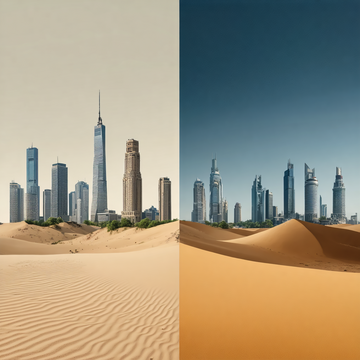
Sand looks ordinary, almost invisible, which is exactly why its crisis is so easy to miss. Yet the world uses about 50 billion tonnes of sand each year, making it the second most-used resource after water. And not all sand is interchangeable: the smooth grains of desert dunes are often unsuitable for concrete, so builders usually depend on sand from rivers, lakes, coastlines, the seabed, or crushed rock. (unep.org)
The latest warning came from UNEP on May 12, 2026. Its new report argues that global demand is now outpacing sustainable supply, and that sand use for buildings alone could rise by 45% by 2060. UNEP draws a striking distinction between “dead” sand and “alive” sand. “Dead” sand is the kind locked into concrete, asphalt, and glass. “Alive” sand remains in rivers, deltas, beaches, and coastal waters, where it filters water, supports biodiversity, stabilizes landscapes, reduces erosion, and helps protect communities from storm surges and saltwater intrusion. In other words, when we remove sand from nature, we are not just taking a building material; we are weakening ecosystems that quietly protect human life. (unep.org)
The damage is no longer theoretical. UNEP’s Marine Sand Watch has estimated that around 6 billion tonnes of sand and other sediments are dredged from marine environments every year, and the organization now says that about half of dredging companies operate within Marine Protected Areas, accounting for 15% of the volume dredged. Researchers have also linked excessive sand mining to riverbank collapse, biodiversity loss, salinization, and higher flood risk. This is why some scientists now describe sand not as a cheap, abundant material, but as a finite resource that urgently needs governance. (unep.org)
There is another twist: sand is not only about skyscrapers and highways. OECD reported in February 2026 that sand and silicates are also strategic inputs for semiconductors, solar panels, electronics, and the automotive industry. That makes the problem even more modern—and more complicated. The likely way forward is not a single miracle substitute, but better monitoring, transparent permits, recycled construction materials, and more efficient building design. Sand may seem humble, but modern civilization is built on it, and nature depends on it too. (oecd.org)