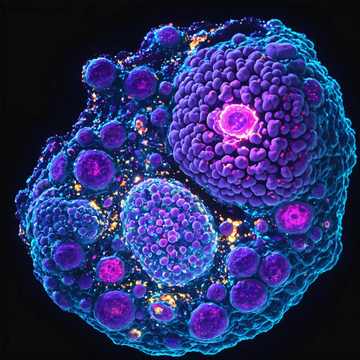
Aging research has long suffered from a cartographic problem: scientists knew that senescent cells matter, but not precisely where they accumulate, how they differ from one tissue to another, or when they shift from protective to destructive. On June 11, 2026, the NIH announced that its Cellular Senescence Network, or SenNet, had reached a major milestone by publishing the first large-scale atlas of human cellular senescence in a compendium of papers in Cell. Senescent cells are cells that stop dividing yet remain metabolically active; in healthy contexts they can aid wound healing and suppress tumors, but with age they may evade immune clearance, accumulate, and release inflammatory signals that help drive chronic disease. (nih.gov)
What makes this work especially consequential is that it rejects the old idea of senescence as a single, uniform state. SenNet introduces the concept of “senotypes,” a classification system that groups senescent cells according to their tissue location and biological context. That shift sounds subtle, but it is intellectually radical: it implies that “old cells” are not one thing, but a heterogeneous population whose behavior depends on where they reside and what stresses shaped them. SenNet was launched by the NIH Common Fund in 2021 precisely because these cells are rare, diverse, and notoriously difficult to identify in living tissues. (nih.gov)
The early atlas already sketches a far more intricate geography of aging than many researchers expected. According to the NIH, SenNet has mapped senescence-related features in tissues including the brain’s prefrontal cortex, the lungs, and lymph nodes. The consortium also reports new computational tools, alongside single-cell, spatial-omics, and AI-based methods, to detect these elusive cells. Particularly striking is the claim that blood-based markers derived from this work may help predict kidney disease, frailty, and even future diabetes risk in human aging studies. (nih.gov)
For learners of English, the most memorable lesson may be conceptual rather than linguistic: aging is no longer being studied as a vague, whole-body decline, but as a mosaic of highly specific cellular states. SenNet’s publicly accessible atlases and data resources aim to make that mosaic visible to the wider scientific community, with the long-term hope of enabling therapies that eliminate harmful senescent cells while preserving beneficial ones. In other words, the map is not the cure—but without the map, the cure would remain guesswork. (nih.gov)