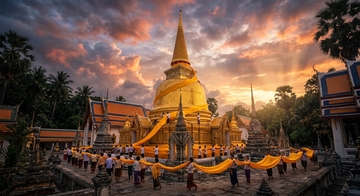
On July 25, 2026, UNESCO added Wat Phra Mahathat Woramahawihan to the World Heritage List. The Buddhist temple is in Nakhon Si Thammarat in southern Thailand. It became Thailand’s ninth World Heritage Site and the first one in the southern part of the country. (thailand.prd.go.th)
Why is this temple so important? One major reason is its long history. The monastery was founded in the eighth century on a site where a Hindu building had once stood. Nakhon Si Thammarat was located near important sea trade routes. As travelers and religious teachers moved through the area, they brought different beliefs and artistic styles with them.
These ideas came from places such as India, Java, Sri Lanka, and what is now southern Myanmar. At the temple, they were mixed with local traditions. Its Great Reliquary, a sacred Buddhist tower, shows influences from Hinduism and different forms of Buddhism. Later, its special design influenced religious buildings in Thailand, Malaysia, and other areas. UNESCO therefore recognized the temple as an excellent example of cultural exchange. (whc.unesco.org)
Another reason is that Wat Phra Mahathat is not simply an old building. It is still an active religious center. Local people continue to pray there and take part in traditional events. One famous event is a ceremony in which people carry a long cloth and wrap it around the Great Reliquary. The temple is also connected with Nora, a traditional dance drama from southern Thailand. (tatnews.org)
Finally, the temple has kept much of its original design, purpose, and religious spirit. Traditional materials and methods have been used during repairs, and local communities have helped protect the site. Wat Phra Mahathat became a World Heritage Site because it connects architecture, international cultural exchange, and living faith in one remarkable place.