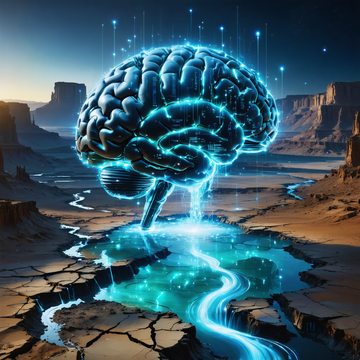
AI often feels clean and weightless: you type a prompt, and an answer appears in seconds. Yet the machinery behind that moment is anything but invisible. The International Energy Agency estimates that global electricity use by data centres could reach about 945 terawatt-hours by 2030—roughly double the 2024 level and just under 3% of total world electricity consumption. Its 2026 update also says data-centre electricity demand surged 17% in 2025, showing how quickly AI infrastructure is expanding. (iea.org)
What worries the United Nations is not only carbon emissions, but the broader environmental bill. A June 3, 2026 report from the United Nations University argues that AI must be judged through three lenses at once: carbon, water, and land. In other words, every kilowatt-hour used by AI carries multiple footprints, and a low-carbon power source is not automatically low in water use or land use. The same report stresses that AI is a material system built on data centres, chips, cooling equipment, electricity grids, and mineral supply chains—not just software floating in the cloud. (unu.edu)
The numbers are striking. According to UN reporting on the UNU study, AI-related water consumption could equal the basic annual domestic needs of 1.3 billion people by the end of this decade, while its land footprint could exceed 14,500 square kilometres. The study also suggests that everyday use—not just the training of giant models—accounts for roughly 80% to 90% of AI’s total energy demand, which means billions of ordinary prompts matter more than many users realize. (ungeneva.org)
That is why the UN is now pressing for transparency. On June 23, 2026, Secretary-General António Guterres proposed an “AI Environmental Transparency Initiative,” calling on major AI companies to measure and publicly disclose the full environmental impact of their systems and to power every data centre with renewable energy by 2030. The message is clear: if AI is going to shape the future, its environmental costs can no longer remain hidden. (un.org)