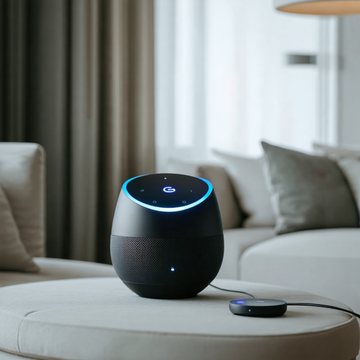
For years, smart speakers trained people to talk like machines: “Turn on the lights,” “Set a timer,” “Play music.” Google’s new Home Speaker, announced on June 17, 2026, is trying to change that habit. It is the first device built for Gemini for Home, and Google says users no longer need to memorize fixed command phrases. Instead, the speaker is designed to understand natural speech, handle multi-step requests, and even follow corrections in the middle of a sentence. The device is priced at $99.99, and Google said it would reach stores on June 25. (blog.google)
The bigger story is not only the speaker itself, but the new idea behind it. Google describes Gemini for Home as a replacement for Google Assistant on compatible speakers and displays. Basic functions remain free, including smart-home controls, media playback, alarms, timers, calendars, notes, lists, reminders, and general questions. Some advanced features, however, require Google Home Premium, such as Gemini Live for open-ended conversation, Camera History Search, and Home Brief summaries of what happened around the house. (blog.google)
This changes home AI in an important way. A smart speaker is no longer just a voice remote control. It is becoming a system that can reason across devices and situations. Google’s official examples include asking whether a back gate is open based on Nest camera activity, or having a free-flowing chat with Gemini. The hardware also shows Google’s larger plan: the Home Speaker includes 360-degree sound, three far-field microphones, Wi‑Fi 6, Bluetooth 5.4, and Matter/Thread hub support, so it can act as both an audio device and a smart-home center. (blog.google)
For Japanese learners, one more detail is especially interesting: Google’s support pages list Japan and Japanese among the countries and languages in Gemini for Home early access. That means this shift toward more human, less robotic home AI is not limited to English-speaking markets. In the near future, the smartest speaker may not be the one that obeys the shortest command, but the one that understands the way people naturally speak. (support.google.com)