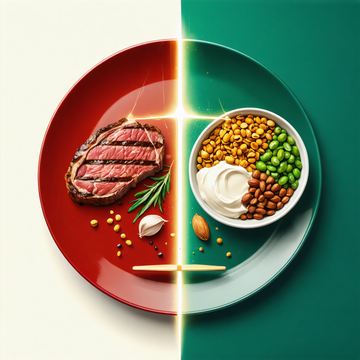
The latest American food fight is not really about whether protein matters; almost everyone agrees that it does. The dispute is about which protein should anchor a “healthy” diet. On January 7, 2026, HHS and USDA released the Dietary Guidelines for Americans, 2025–2030, under the slogan “eat real food.” The new guidance tells Americans to prioritize protein at every meal, consume 1.2–1.6 grams of protein per kilogram of body weight per day, and choose from both animal and plant sources, explicitly including red meat. It also endorses full-fat dairy and says fats such as olive oil, butter, or beef tallow can all have a place, while still stating that saturated fat should stay below 10% of daily calories. (hhs.gov)
What makes the debate so sharp is that the government’s own advisory scientists had pointed in a somewhat different direction. The Scientific Report of the 2025 Dietary Guidelines Advisory Committee, released in December 2024, recommended a dietary pattern that emphasizes beans, peas, and lentils while reducing red and processed meats. It even proposed moving legumes to the front of the protein group, ahead of meats, poultry, and eggs. In other words, the final federal message did not erase plant protein, but it clearly elevated red meat and overall protein intake more than the advisory committee had suggested. (dietaryguidelines.gov)
The American Heart Association answered almost immediately. In its January 7, 2026 response, it praised the government’s tougher line on added sugars, refined grains, and highly processed foods, yet warned that the new language on red meat and salt could push people past safe limits for saturated fat and sodium. Then, on March 31, 2026, the AHA issued updated cardiovascular guidance that again urged people to shift from meat toward plant sources such as beans, peas, lentils, and nuts, to choose fish regularly, and to prefer low-fat or fat-free dairy over full-fat versions. (newsroom.heart.org)
That is why this controversy is intellectually interesting: both sides invoke “real food,” but they mean different nutritional logic. The federal guidelines emphasize abundance of protein; the cardiology camp emphasizes substitution, asking what replaces what. And that distinction matters, because according to the AHA, three out of four Americans already meet or exceed protein recommendations from meats, poultry, and eggs, while far fewer get enough seafood, nuts, seeds, and soy. A 2025 study covered by the AHA added another twist: more minimally processed plant protein was associated with a lower risk of hypertension, whereas heavily processed plant alternatives may blur those benefits. (heart.org)