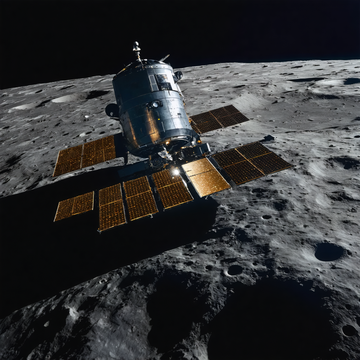
In April 2026, NASA’s Artemis II mission made history. On April 1, the Space Launch System rocket lifted off from Kennedy Space Center in Florida and sent four astronauts into space aboard the Orion spacecraft. The crew was Reid Wiseman, Victor Glover, Christina Koch, and Jeremy Hansen from the Canadian Space Agency. Artemis II was the first crewed Artemis flight, and it sent humans toward the Moon for the first time since Apollo 17 in 1972. (nasa.gov)
The mission was not a Moon landing. Instead, it was a test flight around the Moon and back to Earth. Orion left Earth orbit, flew toward the Moon, and passed about 4,067 miles above the lunar surface at its closest point. The astronauts then began the trip home and safely splashed down in the Pacific Ocean on April 10, 2026. The whole journey lasted a little more than nine days. (nasa.gov)
Artemis II was also a record-setting mission. NASA said the crew flew 695,081 miles in total and reached 252,756 miles from Earth at the farthest point. That was farther than any humans had ever traveled before. During the flight, the crew tested Orion’s life-support system, flew parts of the spacecraft by hand, and checked spacesuits and emergency tools. They also took more than 7,000 pictures, including views of the Moon’s far side and even a solar eclipse seen from space. (nasa.gov)
Why is this mission exciting? Artemis II showed that NASA can send people safely into deep space again. It was a big step toward later Artemis missions, which NASA says are part of its plan for long-term exploration of the Moon and, one day, Mars. After more than 50 years, people are once again flying around the Moon—and this time, the story is only beginning. (nasa.gov)