Have you ever seen someone walk into a shop with an empty bottle? It looks a little strange at first. But in a refill store, that empty bottle is the important thing. Many refill stores have opened in recent years as people look for ways to cut waste. (apnews.com)
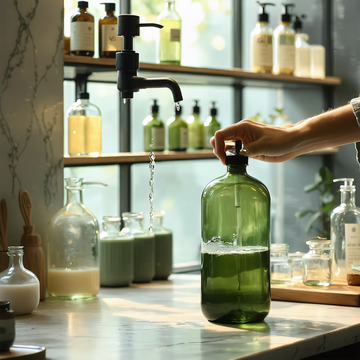
Here is how it works. You bring a clean bottle or jar from home. At some refill shops, the staff weighs it first. Then you fill it with soap, shampoo, or detergent, and you pay only for the amount you take. In Japan, this idea already feels familiar. Kao says refill packs have taken root in Japan, and the company offered 423 refill products as of December 2023. Some MUJI stores in Japan also sell detergent by 100 milliliters and let shoppers use an empty PET bottle or a used MUJI bottle. (apnews.com)
Now picture Aki, a busy office worker. On her way home, she stops at a shop with her old dish soap bottle. She fills only a little, because she still has some at home. No new bottle. Just the soap she needs. Shops like ecostore’s Refill Station can now be found in many parts of Japan, from Tokyo and Kanagawa to Osaka, Kobe, Shimane, and Hiroshima. (ecostorecorporate.com)
But here is the important turn. Refilling is not magic. It helps most when it really replaces new single-use packaging. That matters, because containers and packaging are a big part of trash. The U.S. EPA says they made up 82.2 million tons, or 28.1 percent, of municipal solid waste in 2018. UNEP also said in its 2024 annual report that it supported more than 30 countries working on rules to scale up reuse and refill systems. (apnews.com)
So next time you see an empty bottle, maybe it is not empty at all. Maybe it is the start of a different way to shop.