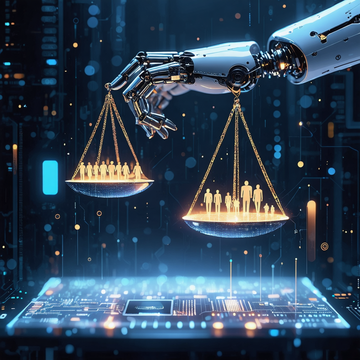
When companies use AI to screen job applicants, who should be blamed if the system discriminates? That question became much more real on June 22, 2026, when a federal judge in California largely refused to dismiss key claims against Workday, a company whose software is widely used in hiring. The lawsuit began in February 2023, when Derek Mobley alleged that Workday’s screening tools filtered him out because he is Black, over 40, and disabled. The case later expanded, and in May 2025 the court allowed a nationwide collective action on age-discrimination claims for applicants aged 40 and older. In the latest ruling, the judge kept the four plaintiffs’ claims under California’s Fair Employment and Housing Act alive and also allowed plaintiff Jill Hughes’s disability claim under the ADA to continue. (cand.uscourts.gov)
What makes this case so important is not only the claim that AI can be biased, but also the idea that the software vendor itself may share responsibility. In a July 12, 2024 order, Judge Rita Lin said the complaint plausibly alleged that Workday acted as an agent of employers, because its customers may have delegated traditional hiring functions, including rejecting applicants, to Workday’s algorithmic tools. The EEOC has taken a similar view. In its 2024 annual report and in its amicus brief in this case, the agency said a third-party agent may be liable when an employer gives it authority over hiring decisions. The EEOC also reminds workers that existing anti-discrimination laws still apply even when employers use AI. (clm.com)
For HR departments, the lesson is clear: buying AI does not mean outsourcing accountability. California’s automated-decision-system employment regulations, now in effect, say that an “agent” can include a third party that creates or uses an automated decision system on an employer’s behalf, especially in areas like applicant screening and hiring. So the new common sense in HR is simple but serious: employers must test and monitor these tools, and vendors can no longer pretend they are just neutral technology providers. The Workday case is still ongoing, but it has already changed the conversation from “Can AI save time?” to “Who answers when AI is unfair?” (calcivilrights.ca.gov)