On February 24, 2026, the Vera C. Rubin Observatory sent out its first scientific alerts, issuing about 800,000 notices in a single night and inaugurating a system expected to grow to roughly 7 million alerts per night. Each alert is not a finished interpretation but an urgent declaration that something in the sky has changed since Rubin last looked: a source has brightened, faded, appeared, or moved. To make that possible, Rubin’s software compares every new image with a reference template and can release a public alert within about two minutes of image capture, fast enough for astronomers elsewhere to react before a transient event slips away. (rubinobservatory.org)
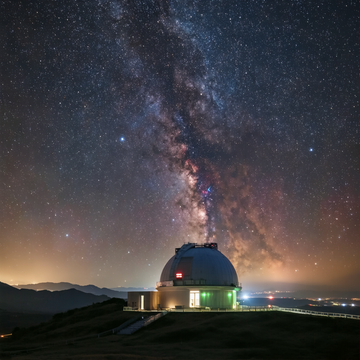
That speed is the essence of “real-time astronomy.” The night sky only seems serene; in reality it is full of supernovae igniting, variable stars pulsating, active galactic nuclei flickering, and asteroids racing across the field. Rubin was built for this restless universe. On Cerro Pachón in Chile, its 8.4-meter telescope carries the world’s largest digital camera, a 3,200-megapixel instrument. The telescope can reposition in about five seconds, and during the Legacy Survey of Space and Time, which Rubin says will begin later in 2026, it will scan the Southern Hemisphere sky nightly for ten years, covering the visible southern sky every three to four nights. (rubinobservatory.org)
The significance of the “first alerts” is therefore philosophical as well as technical. Rubin is turning astronomy from a discipline of delayed inspection into one of immediate response. Its first public imagery, released on June 23, 2025, already hinted at the scale of the coming revolution: in just over ten hours of test observations, Rubin captured millions of galaxies and Milky Way stars and identified 2,104 previously unseen asteroids. Now the alert stream converts that visual abundance into a living data pulse, distributed through broker platforms so researchers can sift, classify, and pursue the most interesting phenomena almost at once. The result is not merely a better telescope, but a new tempo of thought: the universe no longer arrives as an archive, but as breaking news. (nsf.gov)