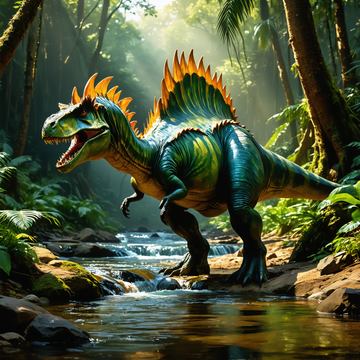
In February 2026, scientists announced a new dinosaur from the central Sahara in Niger: Spinosaurus mirabilis. The discovery was published in the journal Science by a team led by paleontologist Paul Sereno of the University of Chicago. According to the researchers, this is the first clear new species of Spinosaurus described in more than 100 years. (eurekalert.org)
This animal was a close relative of Spinosaurus aegyptiacus, the famous sail-backed, fish-eating giant from North Africa. But S. mirabilis had something very special: a tall, curved crest on its head, shaped like a scimitar, or curved sword. Scientists say the crest was probably covered by keratin, the same material found in bird beaks and human nails, so it may have looked even taller in life. Its upper and lower teeth also fit together in a way that would help trap slippery fish. (biologicalsciences.uchicago.edu)
The place where the fossils were found is just as exciting as the dinosaur itself. Earlier spinosaur fossils were mostly found near ancient coasts. However, S. mirabilis was found far inland, about 500 to 1,000 kilometers from the nearest ancient shoreline. The fossils were buried in river sediments near the remains of long-necked dinosaurs, showing that this animal lived in a river-side environment. This suggests that at least some spinosaurs hunted in rivers and shallow water, instead of living only near the sea. (eurekalert.org)
The discovery story feels like an adventure movie. Researchers first picked up strange crest bones and jaw pieces in November 2019. When they returned in 2022 and found more crests, they understood they had found a new species. Around 95 million years ago, this huge hunter walked along forested riverbanks in a place that is now dry desert. For English learners, that may be the most amazing part: today’s Sahara looks empty, but long ago it was full of giant life. (biologicalsciences.uchicago.edu)