Wait. Is this bottle empty?
Do we need a new one?
No. I have shampoo in a small bag.
I open the bag. I put the shampoo in.
Now, the old bottle is full again.
We use the bottle again. This means less plastic.
Empty is not always the end.
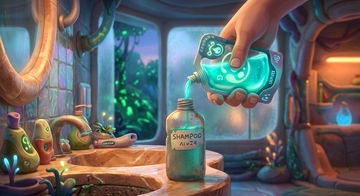
Wait. Is this bottle empty?
Do we need a new one?
No. I have shampoo in a small bag.
I open the bag. I put the shampoo in.
Now, the old bottle is full again.
We use the bottle again. This means less plastic.
Empty is not always the end.
待って。このボトルは空かな?
新しいのが必要かな?
いいえ。小さな袋にシャンプーがあるよ。
袋を開けます。シャンプーを中に入れます。
さあ、古いボトルはまた満タンです。
ボトルをまた使います。これはプラスチックが減るということ。
空っぽは、いつも終わりとは限らないのです。
be動詞で始まる簡単な疑問文です。「これは〜ですか?」と物の状態をたずねます。
e.g. Is this bottle empty?
訳: このボトルは空ですか?
「私は〜を持っています」という所有を表す基本の文です。
e.g. I have shampoo in a small bag.
訳: 小さな袋にシャンプーを持っています。
「これは〜を意味する」と、前の話の結果や意味をまとめる言い方です。
e.g. This means less plastic.
訳: これはプラスチックが減るということです。
ボトル、びん
e.g. The bottle is on the desk.
訳: そのボトルは机の上にあります。
空の、何も入っていない
e.g. My cup is empty.
訳: 私のカップは空です。
新しい
e.g. I have a new book.
訳: 私は新しい本を持っています。
シャンプー
e.g. I use shampoo every day.
訳: 私は毎日シャンプーを使います。
袋、バッグ
e.g. The bag is small.
訳: その袋は小さいです。
開ける
e.g. I open the door.
訳: 私はドアを開けます。
いっぱいの、満タンの
e.g. The cup is full.
訳: カップはいっぱいです。
プラスチック
e.g. This bag is plastic.
訳: この袋はプラスチックです。
新しいもの(前に出た名詞の代わり)
e.g. Do we need a new one?
訳: 新しいのが必要ですか?
〜を中に入れる
e.g. I put the shampoo in.
訳: シャンプーを中に入れます。
また満タンに
e.g. The old bottle is full again.
訳: 古いボトルはまた満タンです。
〜をまた使う、再利用する
e.g. We use the bottle again.
訳: 私たちはボトルをまた使います。
いつも〜とは限らない
e.g. Empty is not always the end.
訳: 空っぽがいつも終わりとは限らない。